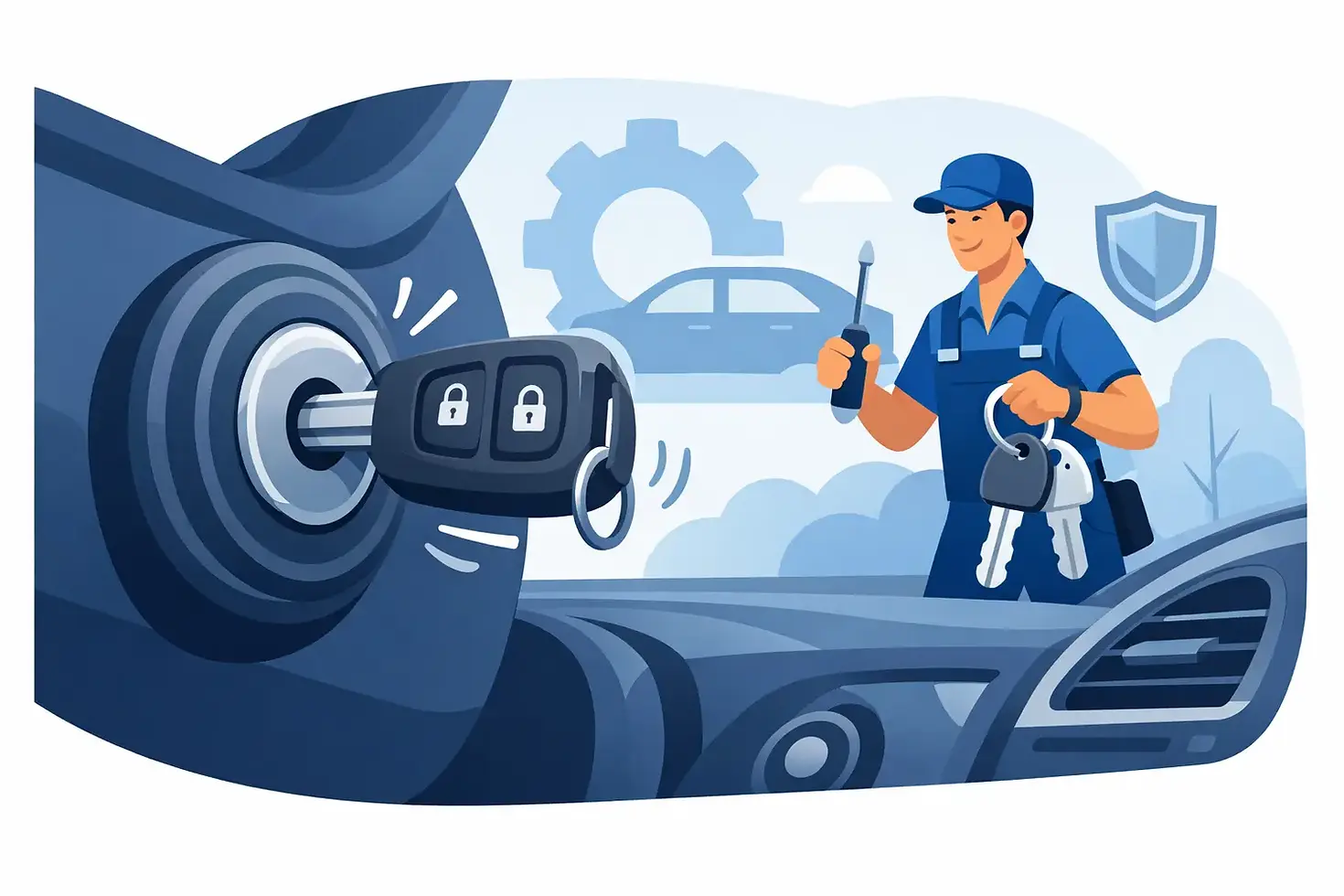
Car Key Stuck in Ignition? Locksmith Help
You have arrived at work, pulled into your driveway, or stopped at a store - and now the key will not come out of the ignition. Searching for a car key stuck ignition locksmith is a practical next step when a few safe checks do not release it. Forcing the key can turn a manageable roadside problem into a damaged ignition cylinder, broken key, or a car that will not start.
A stuck ignition key is frustrating because it can leave the vehicle running, drain the battery if accessories stay on, or keep you from locking the car securely. The good news is that the cause is often identifiable. A trained mobile automotive locksmith can assess the key, ignition, and related lock components at your location and recommend the safest solution.
Start With These Safe Checks
Before calling for service, make sure the vehicle is in a safe place. Set the parking brake firmly and keep your foot on the brake pedal. Never attempt repairs while stopped in traffic or in an unsafe roadside location.
First, confirm the transmission is fully in Park. In many automatic vehicles, the ignition will not release the key unless the shifter is seated precisely in the Park position. Press the brake, move the shifter firmly into Park, then gently turn the key toward the off position. Do not twist it hard.
If the steering wheel is locked against the curb or held under pressure, it can bind the ignition. Apply light pressure to the key in the normal removal direction while gently moving the steering wheel left and right. One direction may have more movement than the other. This can release the tension without damaging the key or cylinder.
Also check the key itself. If it is visibly bent, cracked, heavily worn, or attached to a large, heavy key ring, stop trying to remove it. A weak key can break inside the ignition with one more hard turn. Remove unnecessary weight from the ring if possible, but do not pull or pry on the key.
Why a Car Key Gets Stuck in the Ignition
The ignition is more than a simple key slot. Depending on the vehicle, it works with mechanical pins, the steering lock, the transmission interlock, electrical switches, and an anti-theft system. A problem in any of these areas can keep the key from returning to the position where it can be removed.
A worn or damaged key
Daily use wears down the grooves and edges that match the ignition cylinder. Eventually, the cylinder may no longer recognize the key cleanly enough to rotate or release. Damage can happen after the key is dropped, bent in a pocket, used as a tool, or put under strain from a heavy keychain.
If you have a spare key, it may provide a useful clue. A spare that turns and removes normally points to wear in the everyday key. Still, do not repeatedly test keys if the ignition feels rough or jammed. A professional can cut and program a replacement key when the vehicle requires a transponder chip or electronic fob.
Steering wheel pressure
This is common after parking with the wheels turned. The steering wheel lock can place enough pressure on the ignition mechanism that the key will not rotate back. Gentle wheel movement often helps, but aggressive force can snap the key or damage internal ignition components.
A shift interlock or Park-position problem
On automatic vehicles, the shifter and ignition are connected by safety systems. If the vehicle does not fully register Park, the key may remain trapped even though the shifter appears to be in the correct position. A loose shifter, worn linkage, brake-switch issue, or electrical problem may be involved.
This is one of the situations where the fix may not be the ignition itself. A locksmith can identify when a key or cylinder issue is likely and when the vehicle may need a qualified mechanic for transmission or electrical diagnosis.
A failing ignition cylinder
An ignition cylinder contains small moving parts that must line up with the key. Dirt, internal wear, broken springs, or damaged wafers can prevent normal turning and key removal. Warning signs often include needing to jiggle the key, a key that only works at a certain angle, or a cylinder that feels sticky for weeks before it finally locks up.
Prompt service matters here. Continuing to drive with a failing ignition can leave you stranded at the worst time, especially if the key later will not turn at all.
What Not to Do When the Key Will Not Come Out
Avoid quick fixes that create bigger repairs. Do not yank the key, strike the ignition, use pliers, or insert screwdrivers, pins, or other objects into the keyway. Those methods can damage delicate components and make professional extraction more difficult.
It is also best not to spray random lubricants into the ignition. Some products collect dirt, leave residue, or interfere with the cylinder. The right treatment depends on the vehicle and the actual condition inside the ignition.
Do not disconnect the battery simply to get the key out unless a qualified professional has instructed you to do so. Modern vehicles may have security systems, electronic steering locks, and memory settings that complicate the situation. If the engine is running and the key is stuck, remain with the vehicle in a safe location and get help promptly.
When to Call a Car Key Stuck in Ignition Locksmith
Call a mobile locksmith when safe checks have not released the key, when the key is damaged, or when the ignition feels like it may break. The same applies if part of the key has already snapped off inside the cylinder. Trying to extract a broken piece yourself can push it farther in and damage the ignition.
A mobile automotive locksmith can come to your home, workplace, parking lot, or roadside location with tools designed for vehicle keys and ignition-related issues. Depending on the vehicle and diagnosis, service may include careful key extraction, a new key cut from the existing key or vehicle information, transponder key programming, key fob programming, or evaluation of the ignition cylinder.
There is a trade-off worth understanding. Some ignition problems can be resolved with locksmith service, while others involve vehicle-specific electrical, steering-column, or transmission components that require a repair shop or dealership. An honest technician should explain what they find before work begins, rather than promising a one-size-fits-all repair.
For Metro Atlanta drivers, Kizer Auto Group Auto Locksmith provides mobile assistance for key emergencies, broken-key extraction, replacement keys, and compatible ignition-related concerns. An insured technician can assess the situation on site, helping you avoid a tow when the issue is one that can be handled where your car is parked.
Information That Helps a Technician Arrive Prepared
When you call, have the vehicle year, make, model, and your exact location ready. Let the technician know whether the key turns, whether the engine is running, whether the steering wheel is locked, and whether you have a spare key. If the key broke, mention whether any portion remains outside the ignition.
These details help determine what equipment may be needed. Modern keys often have transponder chips, remote functions, or smart-key electronics, and programming requirements vary by vehicle. Clear information also helps the locksmith give more accurate expectations about options and pricing.
If your key is stuck right now, protect the ignition by resisting the urge to force it. Secure the vehicle as safely as possible, try the gentle Park and steering-wheel checks once, and call for professional mobile help before a stuck key becomes a broken one.


Comments